Iterative Denoise
Noise Pilot is a tool for controlling iterative denoise diffusion processes.
To learn how iterative denoising works, please see these YouTube videos:
Text to Image: Part 2 – how image diffusion works in 5 minutes
These videos describe diffusion as a looping process where we generate a path from random images to the image we want, by taking incremental steps over and over. This is a process called iterative denoising. Each step of the path we estimate the noise in a current estimate, and subtract estimated noise to produce a next estimate.
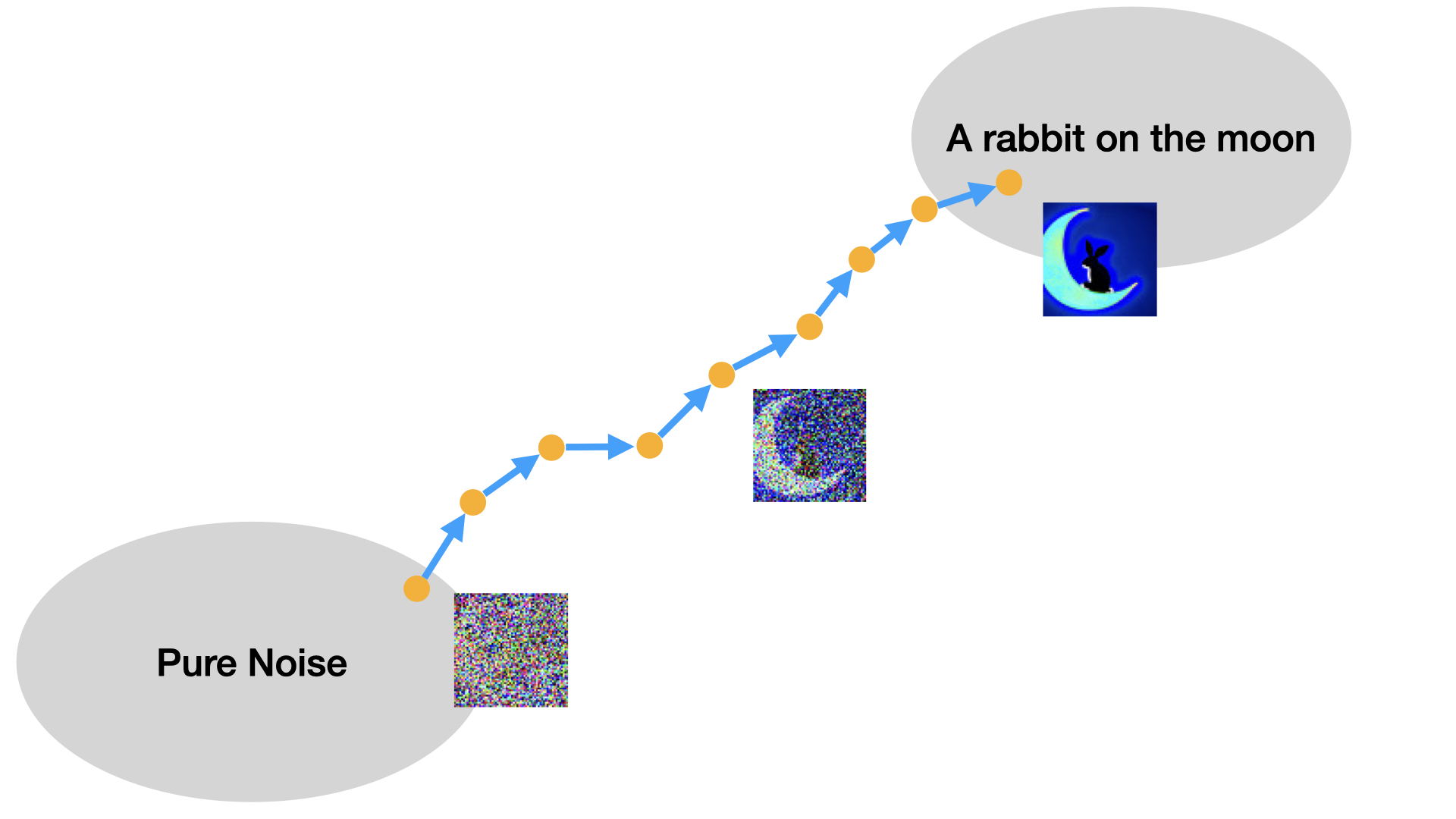
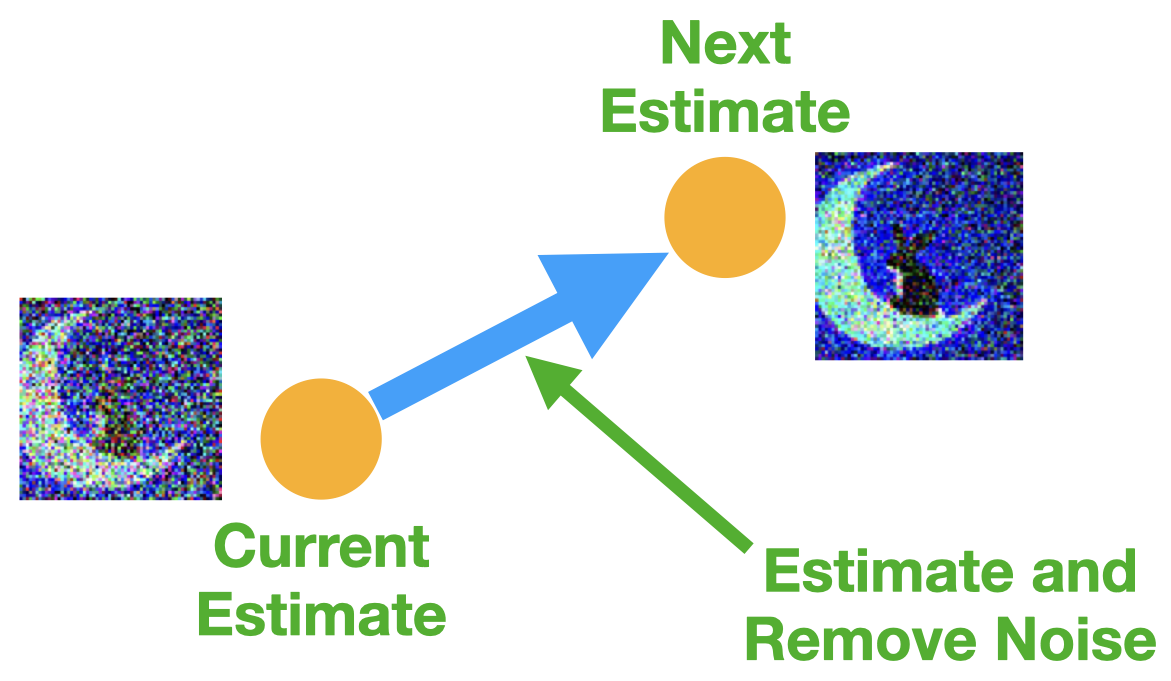
A single step of this process consists of 3 major parts.
- Current Estimate: The current point in the path that we are at. This is an image with noise still remaining in it.
- Estimate and Remove Noise: Use a machine learning model to estimate the noise in an image, and use an algorithm to remove some of it.
- Set Next Estimate: The result of noise removal should be set to the
current estimatefor the next step we take.
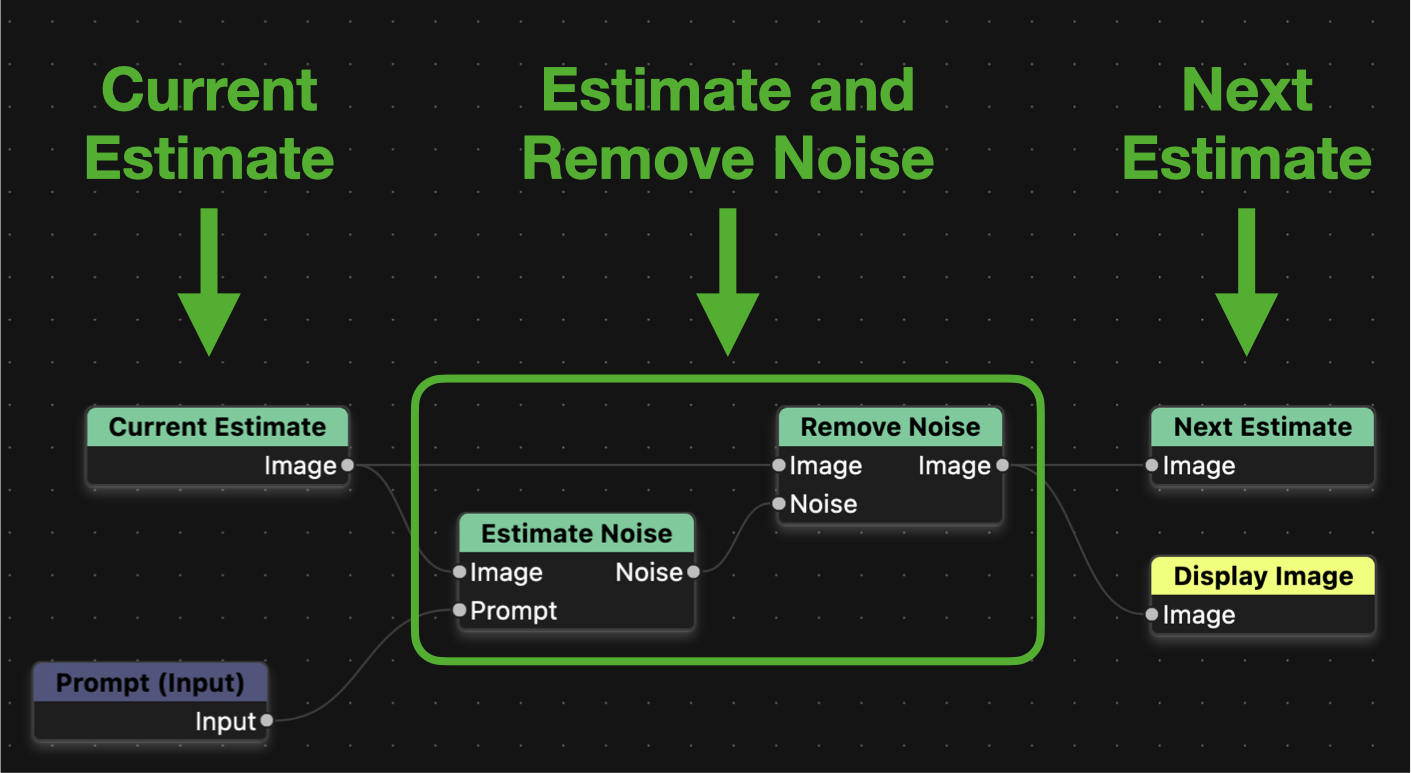
In Noise Pilot, we compute this process by using an Iterative Denoise group node. By default, this is how the group nodes look, and we’ve labeled which nodes correspond to which part of the previous process.
The group node has 3 special parameters, and one input parameter.
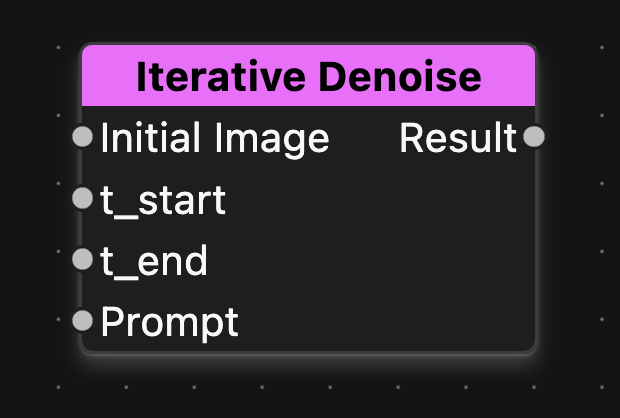
Initial Image sets the initial value for current estimate.
t_start and t_end control the steps of the path in the diffusion process. Normally, t_start begins and 0 and t_end will end at 32. The model we use is a 32 step diffusion process. You can control these to partially diffuse images (such as in Image to Image translation).